Search any destination – from Botswana to Bandhavgarh – and you’ll be met with advice on the “best time to visit.” Typically, that means peak season: clear skies, dry bush and plenty of wildlife near waterholes. But here’s what those guides rarely mention: off-peak safaris can be just as awe-inspiring as on-peak, often more intimate and profoundly rewarding in ways no brochure can capture.
At Aperture Travel, we believe the best time to go on safari is the time that best suits you. By that we mean aligning with your travel style, your purpose and your appetite for adventure – not just the weather forecast.
It may seem a bit idealistic, but we’ve seen first hand that there’s magic to be witnessed all times of year – and the so-called “off season” holds secrets: quiet wilderness, lower prices, rich photography opportunities and the kind of soul-stirring experiences that might not show up on a peak-season itinerary.
What does “off season” really mean?
In the world of safaris, “off season” typically refers to the periods outside of a destination’s most popular travel months – usually tied to weather patterns, school holidays or specific wildlife movements like the Great Migration.
But off-season isn’t the same everywhere. Examples:
- In East Africa, it often refers to the green or shoulder seasons (April to May and again in November) when short rains turn the plains lush and alive.
- In Southern Africa, off-peak can mean the wetter months from December to March.
- In India and Sri Lanka, it might be the monsoon-adjacent months.
- In Australia, the tropical north has a ‘wet season’ from November to April that many travelers shy away from.
While some see these periods as less ideal, seasoned travelers and expert guides know better. Traveling off season offers a window into a different rhythm of life – when baby animals are born, the air is rich with birdsong and the parks are wonderfully uncrowded.
Five reasons to rethink ‘the best time to visit’
1. You’ll see more unique wildlife
Peak season tends to prioritize marquee wildlife (e.g. the Big Five in Africa: lion, leopard, elephant, rhino, buffalo). But go off peak, and a different cast of characters takes the stage. In East Africa’s green season, migratory birds arrive in their thousands. In Botswana, the Kalahari transforms, drawing lesser-seen species like oryx and springbok. In India, monsoon forests breathe, and leopard sightings spike in quieter reserves. And in Australia’s tropical north, crocodiles, waterbirds and marsupials thrive in full color.
It’s absolutely worth noting that climate change is having a noticeable impact on nature and biodiversity. The month-based timing we’ve traditionally used to mark things like ‘dry season’ and ‘wet season’ are less reliable.
For example, the traditional mid-year migration through the Serengeti in Kenya and Tanzania no longer runs on clockwork; it changes a bit every year, so it’s worth checking with our team at Aperture Travel for the best guidance of when and where to go. We have relationships with operators on the ground, giving us intel that a faraway travel agent in London, Sydney or Boston (for example) wouldn’t know.
2. The light is magical (and so are the photographs!)
If you’re traveling with a lens – or simply love capturing memories – off-season light is a dream. Think soft, diffused skies in Sri Lanka. The golden green flush of East Africa. Cloud drama over Namibia’s deserts (oof). There’s a richness to off-peak visuals that’s hard to replicate during harsh dry-season sun.
Pro tip: If it’s within your budget, hiring a private safari vehicle is the best choice for controlling all of the variables for taking great photographs, such as what time your vehicle departs (e.g. before sunrise), your return schedule and where you spend your time. Some of the most magical experiences happen when you invest the time and space for them to present themselves.
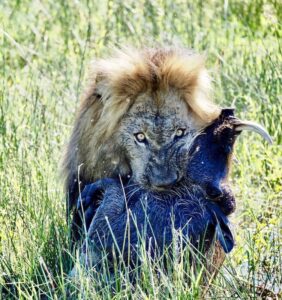
For example, our co-founder Barry and his guide once tracked a pride of lions in the Okavango Delta in Botswana while staying at Duba Plains, a Great Plains Conservation property. After finding a large pride 30 minutes before sunrise, they spend six hours with them, watching multiple attempted hunts, with the day culminating in an epic experience involving eight lions chasing a seemingly endless amount of warthogs. The horizontal plane made it incredible to watch the action all within eyesight, and they may have never witnessed it had they driven away and moved on quickly.
3. You’ll have more space (and peace)
One of the biggest luxuries on safari? Solitude. And in the off season, that’s what you get. Fewer vehicles around a sighting. More personal time with your guide. Easier access to prime accommodations. The chance to really take in – not just see – the wild.
In peak months, even high-end lodges can feel busy; but visit in shoulder or green seasons, and you’ll often have the bush all to yourself.
4. Your trip has greater impact
During quieter months, your presence matters more. Lodges rely on off-season bookings to retain local staff and fund year-round conservation. Your stay helps bridge the gap when tourism numbers dip, as well as keeps local economies thriving in a more stable, sustainable way.
Every Aperture safari includes a contribution to conservation activities, which supports urgent and underfunded wildlife projects in all seasons. But traveling off peak deepens your impact even further, simply by showing up.
5. It’s more affordable (but no less luxurious)
Safari can be a significant investment. But in the off season, your budget stretches further. Rates are lower. Upgrades are more likely. Flights are often cheaper. And you’re not compromising on quality – our handpicked lodges remain exceptional year-round.
Luxury, after all, isn’t just about thread count and wine lists. It’s about how a place makes you feel. And off-peak safaris deliver exclusivity, connection and comfort in spades.
When to consider an off-season safari by region
East Africa (e.g. Kenya, Tanzania, Uganda)
Peak: June to October
Off-peak: April-May (green season), November
Why go off-peak: Fewer crowds, vibrant landscapes, bird migrations, excellent photography light
Southern Africa (e.g. Botswana, Zambia, South Africa)
Peak: May to October
Off-peak: December to March
Why go off-peak: Dramatic skies, newborn animals, active birdlife, better rates
India & Sri Lanka
Peak: November to March
Off-peak: July to September (Sri Lanka’s east coast), April-June (India’s dry heat)
Why go off-peak: Fewer tourists, lush forests, higher chances of unique predator behavior
Australia (Northern Territory, Queensland, Top End)
Peak: May to October
Off-peak: November to April (wet season)
Why go off-peak: Powerful waterfalls, dramatic landscapes, wildlife viewing by boat
So, is going on safari at an off-peak time right for you?
If you’re a first-time safari guest, you might be wondering: will I miss out if I go off-peak? The answer is: absolutely not. In fact, you may experience more. More stillness, more nuance, more connection to place and purpose.
And if you’ve done a safari or two and are looking to go deeper, to explore in a quieter season or a less-traveled region, off-peak is where the real magic lies. Our expert private guides might also have more availability!
Let us guide you
At Aperture Travel, we customize every journey – off peak or on – to suit your values, your needs and your dream of the wild. Whether you’re chasing rare bird species, traveling with accessibility needs, or simply looking for a richer, quieter way to safari, we’re here to make it unforgettable.
Ready to travel differently? Contact us for a chat! Let’s start planning your next adventure – where timing isn’t dictated by crowds, but by what matters most to you.